Decide on Objectives and Assessments
Abstract
This capstone project was to use Skype to address an interviewing problem in an inner city school with students conducting interviews for their Project Citizen (PC) portfolio. These interviews are conducted during the process where the students determine a public policy problem in their community, research the problem, develop a recommended approach, and then document their activities in a portfolio. The interviews are used as part of their research activities and then documented on the boards for the portfolio and in the documentation binder of research. Figure 1 illustrates how the interview documentation is used in the PC portfolio. Through the use of Skype, students are expected to obtain better interviews for their project and enhance their learning in civics, language arts, and technology.
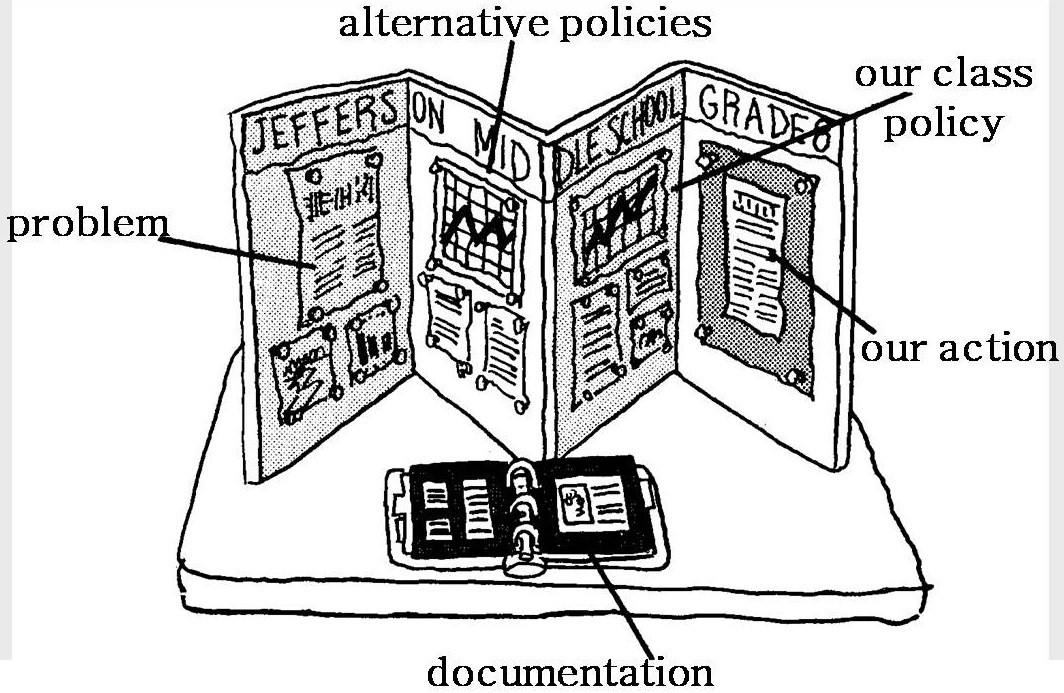
Figure 1. An example of a PC portfolio (courtesy of Center for Civic Education).
Objectives
The objective of this capstone project was to facilitate students’ accomplishment of a Project Citizen portfolio, in particular to address the problem students had encountered in arranging interviews with relevant experts. The expected outcomes address interviewing and the use of technology to communicate. The measurement instruments used for this capstone project incorporate measures of accomplishment of these objectives, in particular in the aspects in which they facilitate the accomplishment of learning objectives associated with civics and language arts. The outcomes, objectives, and assessment measures are summarized in table 1.
Table 1. Outcomes, Objectives, and Assessment Measures.
|
Outcomes |
Objectives |
Assessment Measures |
|
Knowledge about and good attitude toward learning skills on interviewing. |
Students will demonstrate at least 85% required knowledge about interviewing by performing a class interview with an adult in the classroom that demonstrates a synthesis of knowledge on interviews. |
Pre and Post Project Citizen Interview Survey, Skype Interview Planning Checklist |
|
Greater knowledge about interviewing. |
Students will demonstrate at least 85% proficiency conducting interviews. |
Skype Interview Planning Checklist, Project Citizen Skype Script, and Student Productivity Skype Skill Evaluation |
|
Good attitudes toward using technology to communicate. |
Students will achieve at least 85% to demonstrate they are familiar and comfortable with the Voice Over Internet Protocol (VoIP) by using Skype to conduct interviews and by evaluating others. |
Skype VoIP Connecting Checklist and Student Productivity Skype Skill Evaluation
|
The outcomes in table 1 address having the students obtain more and better quality interviews. When the students are limited to face-to-face interviews, they rarely are able to get many interviews and the few interviews they do obtain are typically only with persons in their neighborhood. Through the use of Skype, the students were expected to be able to obtain more interviews and interviews with a wider potential set of people, including public servants and others who have impact on public policy.
The Center for Civic Education (2006, 2007) provides some instruction on conducting interviews regarding public policy as the students complete their Project Citizen portfolio. However, they do not address the difficulty students might have in arranging interviews when the students lack both the time and the interview skills. The first two outcomes of table 1 address improving interview skills and the third outcome addresses students’ attitude toward using technology to save time by using Voice over Internet Protocol (VoIP).
Measurements
The measurement instruments used for this capstone project were designed to address not only the desired outcomes associated with the project, but also to address the civics and language arts standards associated with the Project Citizen interviews.
The students were administered a pre-survey, at appendix A, developed using a Likert-style grading system (Roblyer & Doering, 2010) to measure the students’ knowledge of and attitudes toward computers, the Internet, online communications, and interviews. Yes/no and fill-in-the-blank questions were used to measure knowledge of culture and factual knowledge. Some questions were modeled after Ng and Kong (2008). A similar survey, administered after the project, is at appendix B. The results of the post-survey were compared to the results of the pre-survey.
The students were provided a checklist, at appendix C, to help them plan for the interview. This checklist was developed using outcomes, objectives, and assessment measures from the Partnership for 21st Century Skills (2004) for the core subject of language arts. The Maryland Department of Education (n.d.) standards for language arts, specifically for effective communication were also included.
A script for the students’ use prior to and during the interview, at appendix D, was also provided. This handout was written to guide the students through the objectives and give achievement measurement tools. This structured guide directed the students in an organizing interview process as recommended by Sumner (1991) so they would be prepared for what information they may need during their interview. It also prepared the students for what may happen if the interview went off-script (Alacapınar, 2008), such as if the interviewee declined to answer questions.
The checklist used to evaluate the students’ knowledge of the process of using Skype to conduct interviews is at attachment E. This checklist emphasized the results of their actions rather than the process (Roblyer & Doering, 2010). This checklist was developed with consideration of the outcomes and objectives of table 1, the standards of the National Educational Technology Standards for Students (n.d.) and the Technology for Communication and Expression standard of the Maryland Department of Education (n.d.). This checklist provides a numerical grade in percentage for the teacher to evaluate the student and for student self-assessment.
The rubric at attachment F integrates the evaluation of the lesson, including the use of technology, interviewing, and attitude. It uses Likert-style markings that have been scaled to provide a final percentage result. In each category there are specific subcategories for annotation as strengths and weaknesses. This provided students information on their areas for potential improvement. Questions on this rubric were styled after those used by Ng and Kong (2008) for assessment of distance education and those used by Ten Sigma (2008) for assessment. This rubric can be used for self-assessment, peer-assessment, and teacher-assessment, although the teacher-assessment must also be based on direct observation of the student in all the steps of the activity. Teacher observation may also be used to determine the need for a student to re-do any step in the process.
All the instruments were implemented on hard copy rather than online. This allowed the students’ limited computer time to be focused on interviewing. Schools whose students have ample access to the Internet may choose to implement the assessment instruments using an online resource, such as that offered by teAchnology (n.d.).
Summary
This capstone project used Skype to address the difficulty inner city school students have with conducting meaningful and impactful interviews in the development of a Project Citizen (PC) portfolio. The objectives and measurement instruments directly correlate to the desired outcomes of interviewing skill and use of technology and to relevant language arts and technology standards. Multiple assessment instruments were employed to accurately measure the students’ achievements at the many steps in the process, allow self-, peer-, and teacher-assessment, and encourage improvement. Through the use of Skype, students were expected to obtain more and better interviews for their project and enhance their learning in civics, language arts, and technology.
References
Alacapınar, F. (2008). Effectiveness of project based learning. Eurasian Journal of Educational Research, 33, 17-34. Retrieved October 11, 2009 from EBSCOhost.
Center for Civic Education. (2006). Project citizen: A we the people portfolio-based program, level 1. Calabasas, CA: Author.
Center for Civic Education. (2007). Project citizen: A we the people portfolio-based program, level 2. Calabasas, CA: Author.
Maryland Department of Education. (n.d.). Reading grade 8 voluntary state curriculum. Retrieved June 18, 2005, from http://mdk12.org/mspp/vsc/reading/bygrade/grade8.html.
National Council of Teachers of English. (n.d.). Standards for the English language arts. Retrieved June 24, 2005 from http://www.ncte.org/about/over/standards/110846.html.
National Educational Technology Standards for Students. (n.d.). Retrieved June 23, 2005, from http://cnets.iste.org/students/s_profile-68.html.
Roblyer, M. D., & Doering, A. H. (2010). Integrating educational technology into teaching (5th ed.). Boston: Allyn & Bacon.
Rofer, Christine. (1986, Spring). Interviews that work: A practical guide for journalists. Newspaper Research Journal, 7 (3), 77-77. Retrieved October 11, 2009 from EBSCOhost.
Sumner, David E. (1991, Autumn). Creative conversations: The writer's complete guide to conducting interviews. Journalism Educator, 46 (3), 71-72. Retrieved October 11, 2009 from EBSCOhost.
teAchnology. (n.d.). Rubric makers. Available at http://www.teach-nology.com/web_tools/rubrics/.
Ten Sigma. (2008) Life and employability skills: Transition skills. Retrieved October 11, 2009 from http://www.tensigma.org.
Appendices

|
Appendix A - Handout-Pre Project Citizen Interview Survey.docx Size : 0.015 Kb Type : docx |
|
|
Appendix B - Handout-Post Project Citizen Interview Survey.docx Size : 0.015 Kb Type : docx |
|
|
Appendix C - Handout-Skype Interview Planning Checklist.docx Size : 0.012 Kb Type : docx |
|
|
Appendix D - Handout-Project Citizen Skype Interview Script.docx Size : 0.012 Kb Type : docx |
|
|
Appendix E - Handout-Skype voice over Internet protocol connecting checklist.docx Size : 0.012 Kb Type : docx |
|
|
Appendix F - Handout-Student Productivity.docx Size : 0.013 Kb Type : docx |
Webmaster: Gayle Dietrich, gayledietrich@comcast.net.
Last modified November 29, 2009.
