Design Integration Strategies
Abstract
This capstone project used Skype to address an interviewing problem in an inner city school with students conducting interviews for a Project Citizen (PC) portfolio. These interviews are conducted during the process where the students determine a public policy problem in their community, research the problem, develop a recommended approach, and then document their activities in a portfolio. The interviews are used as part of their research activities and then documented on the boards for the portfolio and in the documentation binder of research. Skype was used at an all-male Science, Technology, Engineering, and Mathematics (STEM) charter middle school in the inner city, a school that calls its students “scholars.” Only face-to-face interviews were available to the control middle school, a co-educational public school in the same inner city. Both schools contained predominantly minority students. Figure 1 illustrates one of the students planning his PC portfolio. Through the use of Skype, students are expected to obtain better interviews for their project and enhance their learning in civics, language arts, art, and technology. Ten lessons over two months were conducted to guide the scholars to feel comfortable and prepared in pursuing more quality interviews of professionals to enhance their PC portfolio.
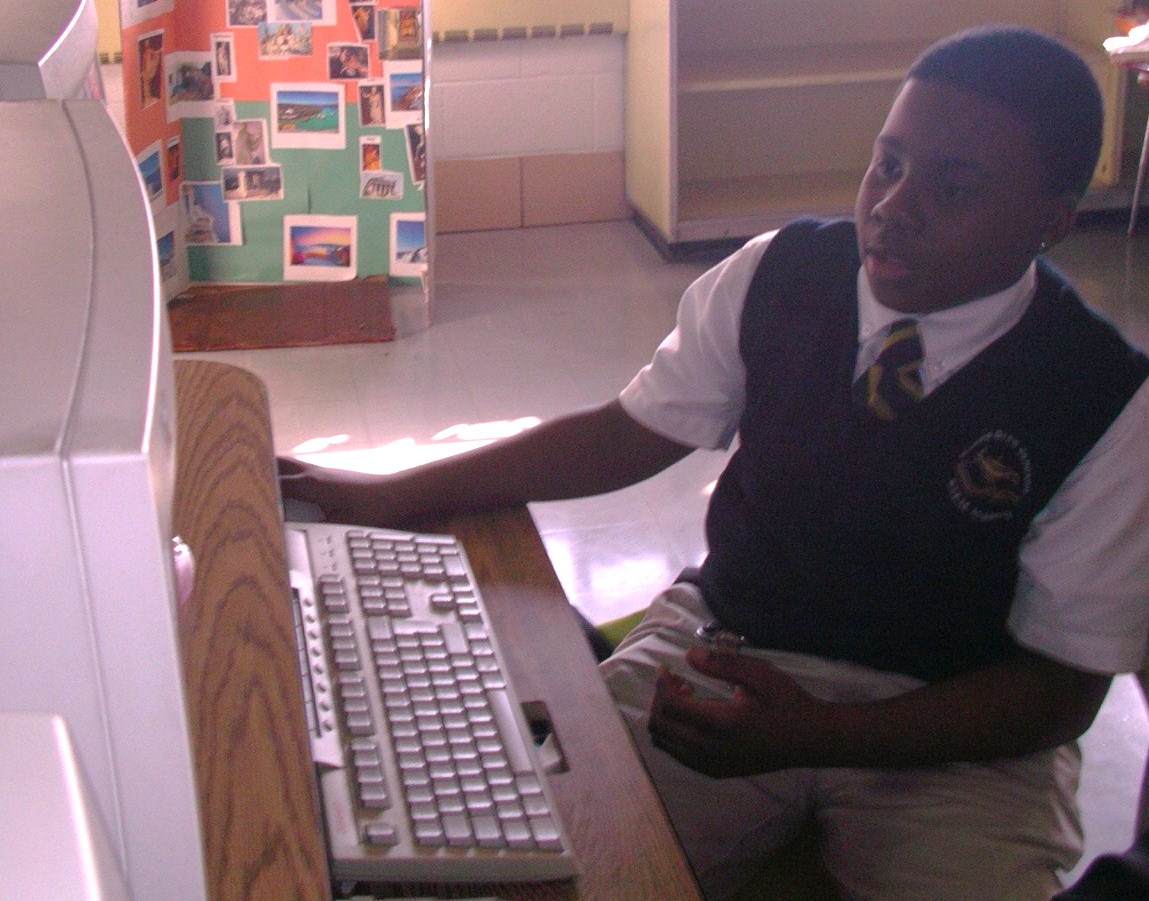
Figure 1. Scholar Brandon planning a PC portfolio (photo by author).
Instructional and Curriculum Approaches
This project was accomplished using a combination of traditional directed teaching and constructivist based teaching. This not only addressed different learning styles of the students, but also allowed scholars to build on the knowledge they gain in the learning process. The ten sessions began with primarily directed teaching to give adequate knowledge for implementation (Roblyer & Doering, 2010) and to convey to scholars that using Skype as a interviewing tool is comparable to interviews they have done before (Pan & Sullivan, 2005). After scholars gained some knowledge of the intended skills using directed strategies, they were given the opportunity to experience interviewing and Skype in smaller groups and at higher levels of potential anxiety, first with peers, then with teachers, then with the actual interviewee. The inquiry-based or constructivist learning started with watching a projected Skype interview. Then as a peer team of four the scholars prepared and interviewed each other. With this experience, the scholars next prepared and interviewed a teacher or staff member. This sequence of progressively more challenging interviews was expected to develop the hands-on confidence in interview skills and poise in using Skype necessary to conduct the interview of the professional for their portfolio.
Prior to implementing this activity, students had begun their Project Citizen portfolio and already had chosen the public policy problem they wished to address. At the STEM school, scholars were anticipated to have sufficient prior knowledge in the use of computers and the Internet. However, recognizing the different abilities in the class, the small group and pair activities were assigned such that scholars with high-level abilities were grouped with those scholars might have needed additional assistance. Most of the scholars required introduction to interviewing skills, Skype, and the use of video-cameras on computers. The pre-survey (appendix A) helped determine the extent of their knowledge.
The initial directed instruction was conducted in a large group. The content addressed the PC portfolio as civics and provided scholars with guidance on conducting interviews as language arts activities, using art to convey messages, and the use of Skype as an enabling technology for interviews. Some instruction used a computer projector to demonstrate the use of Skype. The scholars’ interest was further enhanced by noting that Oprah Winfrey, one of the most admired and successful women in the United States, uses Skype as a communication platform to interview people in far off places (Ng, 2008).
Constructivist strategies built on the knowledge the scholars gained during the directed instruction. By performing a sequence of more challenging interviews, the scholars improved their familiarity and self-confidence in the subject areas. They became proficient at preparing for and conducting interviews for civics content and became “Skypons” (Reece, 2005). Armed with the rubric provided early in the sessions, the scholars understood what was most important for them to be able to perform. Through peer and teacher review, the scholars learned areas in which they could improve their skills.
While the STEM school focuses on STEM education, they are keenly aware of the importance of civics, both in a scholar’s rounded education and in the necessity of civics knowledge even in STEM fields. As Mervis notes in the journal of the American Association for the Advancement of Science (2009), successful science and technology requires scientists with understanding of how our government and lobbyists interact to address the need for continuous financial support for science and technology.
Grouping and Sequence
Preplanning
Two weeks before the first session (October 15, 2009, 4:00 to 6:00 p.m.).
In order to get the appropriate permissions, the needs for Skype interviews for PC were discussed at a meeting with the principal, the classroom teacher, and the PC District Coordinator. The author emphasized how Skype would allow the scholars access to interviewees that otherwise would be unavailable and will allow a greater number and diversity of interviews. For the implementation of this study, the principal was pleased with the new technology to be used at his STEM based school. The classroom teacher agreed to make the arrangements with the technology teacher and PC District Coordinator.
One week before the first session (October 20, 2009, 4:00 to 6:00 p.m.).
The school computers to be used were checked to ensure they had Skype installed, to install Skype, or make alternate arrangements. In this study, the computers on the school property that are normally accessible to the students are controlled by the county and Skype could not be downloaded on those computers. Instead, a laptop with Skype, a microphone, speakers, and a camera were set up. The computer projector was compatible with the laptop and provided a projected image of the laptop screen on a white dry board. The designated room for the PC class had no Internet access and the wireless system could not be accessed. The PC District Coordinator and the classroom teacher met with the room coordinator and resolved the Internet access problem by designating rooms that could accommodate non-county laptops using the school’s wireless Internet connection.
Copies of the handouts in appendices A through F were produced for later distribution to the scholars. Sufficient copies of Project Citizen: A Portfolio-Based Civic Education Program, Level 1 (Center for Civic Education, 2008) text were obtained such that one would be available for the scholars to share in groups of three or fewer.
Week 1
Day 1 (Tuesday, November 3, 2009).
· The Pre Project Citizen Interview Survey (appendix A) was administered to each student.
· In the large group, the Project Citizen text was provided to the scholars and their attention was directed to the interview definition on page 57; the interview forms on pages 14, 24, and 25; the government officials section on page 7; the interview assignment on page 13; the interview community form on page 14; types of professionals to interview on pages 18 through 22; interviews related to the public policy problem on page 39; interviews relative to alternative solutions on page 41; interviews associated with developing class policy on page 43; and interviews to help develop the class’s action plan on page 47 (Center for Civic Education, 2008).
· The two different types of interviews were emphasized: those used to determine the public policy problem and those to conduct research from professionals.
· Using the PC teachers’ guide, Project Citizen: A We the People-Based Portfolio Program Level 1 Teacher’s Guide Edition 2007, to augment the students’ text, emphasis was provided to the information about policymakers on page 7, interviewing volunteers on pages 8 and 9, teacher tips to interview on page 25 (section 4), and interview forms on pages 67, 72, and 73 (Center for Civic Education, 2007).
· The scholars were introduced to Skype and Voice over Internet Protocol (VoIP). An explanation was provided how Skype could make better quality and more interviews for the documentation of research.
· The safety rule was emphasized: in the school no scholar was to use a computer or Skype without a teacher present.
· The scholars were shown the beginning of the process of interviewing with Skype by using the computer projector.
· After the scholars had observed Skype connecting, one of the laptops and half of the group were moved to the other room. Taking turns, each scholar connected and communicated through Skype with a scholar in the other room. It was expected that minute or two would be sufficient to allow the scholars to familiarize themselves with the process and eliminate the giggles. Actually, it took two complete sessions, including interviews with teachers, to eliminate the giggles.
· Once all the scholars had the opportunity to Skype informally with a peer, each group prepared a practice interview to be done with classmates by using Project Citizen Skype Interview Script (appendix D). Two students were the interviewers, one to speak and the other to take notes. There were two interviewees.
· In figure 2 are two avatars known as Vokis that can be used to remind students about the giggles and the steps in starting a video conference interview.
Figure 2. The friendly dog named PC giving support for teachers to use to encourage their students to avoid the giggles
and remember the steps to start a video teleconference interview. Teachers may wish to connect to the Voki website to
make Vokis to address issues that need reinforcement in their classes.
Day 2 (Thursday, November 5, 2009).
· The Skype Voice Over Internet Protocol (VoIP) Connecting Checklist (appendix E) was distributed.
· The scholars were divided into groups as recommended by Pan and Sullivan (2005). One group was positioned in one room and another group in another room, both with computers that had Skype software, Internet connections, video cameras, and microphones. The scholars took turns connecting via Skype to the scholars in the other room. A teacher or instructor was always present in each room.
· After the students became more familiar with using Skype, the teacher discussed the possibilities of using Skype for interviewing. This discussion took place with the large group.
· The filled out handout, Skype VoIP Connecting Checklist (appendix E), was collected.
· The scholars got additional experience with Skype interviews by interviewing teachers they knew.
· Homework was assigned for the students to consider their public policy topic as the subject and generate a list of people or community organizations that would make good interviewees for their portfolio, using their text for guidance. In the final few minutes of the session, the list was started as a large group effort; for homework the scholars were asked to add at least two more contacts and turn it in to the social studies teacher the next day.
· Scholars with access to Skype were encouraged to connect to each other or to the instructor and teacher during the week and have a Skype video conversation.
· The teacher followed up by collecting the homework and arranging for a potential interviewee for the Week 2, Day 3 session.
Week 2
Day 3 (Tuesday, November 10, 2009).
· The Student Productivity of Project Citizen Skype Interview Skills Evaluation (appendix F) was distributed. Scholars were asked to keep this guide to review as they participated in Skype interview sessions. It was pointed out that a peer would be evaluating each scholar. Since each of the five areas on this form has a maximum score of 20 points this provides a possible grade of 100%. This form was filled out the last day of the formal interview sessions by a peer and a teacher. The teacher’s evaluation was used as a grade.
· Since the scholars had all Skyped, they were told they were now Skypons (Reece, 2005). Their Skype VoIP Connecting Checklist handouts were reviewed.
· The large group was reconvened and the advantages and disadvantages of Skype interviews were discussed. It was noted to the scholars that Oprah uses Skype to conduct interviews at a distance (Ng, 2008).
· The Skype Interview Planning Checklist (appendix C) was distributed and the list of potential interviewees that was compiled from the homework was provided. Project Citizen Skype Interview Script (appendix D) and Skype Interview Planning Checklist (appendix C) were filled out for each scheduled interview.
· The scholars scholars conducted a Skype interview with a teacher whom they had not known earlier. The teacher met the students face-to-face and then went to the next room to be interviewed over Skype. During this interview the scholars noted that the background they were displaying in their video was cluttered and unappealing. They elected to put together a more professional background. The two backgrounds are shown in figure 3.
· The scholars were encouraged to add to the list of Skype interview possibilities as they conduct more research on their topic.
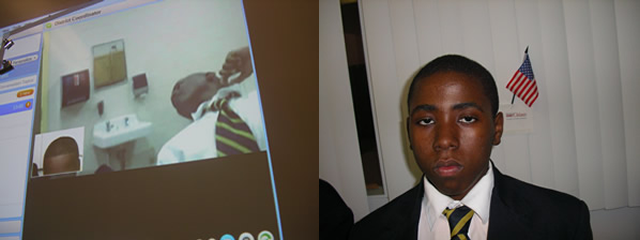
Figure 3. The scholars noted that their initial background, in the left of the photo, was less than professional and elected to
develop a more suitable background, to the right.
Day 4 (Thursday, November 12, 2009).
· The scholar teams prepared for Skype interviews with the instructor and teacher using the Skype Interview Planning Checklist (appendix C), the Project Citizen Skype Interview Script (appendix D), and the Skype Voice Over Internet Protocol (VoIP) Connecting Checklist (appendix E).
· The scholars assembled as a large group and brainstormed on how to make it easier to conduct a Skype interview with a professional.
· The teacher discussed with the scholars the list of good interviewees based on their homework compiled from day two and had the scholars divide the list among them; each scholar was to arrange at least one possible Skype interview. The scholars were instructed to try to schedule an interview for the next session, but were assured that arrangements can be made for interviews during the working day to make it convenient for the interviewee.
· The scholars interviewed a teacher in Germany about their project. She answered their questions and used her laptop camera to show them aspects of her home that were relevant to their project. The scholars got an unexpected benefit from this interchange because the teacher spoke with her father in German as they were gathering information for the American students.
Week 3
Day 5 (Tuesday, November 17, 2009).
· The scholars were assembled as a large group. Interview information that had been arranged by individual scholars was collected. Scheduling conflicts were resolved.
· The scholars conducted Skype interviews of a contractor relevant to their project and a political specialist.
· The scholars worked on collaborating on the documentation of the interviews.
Day 6 (Thursday, November 19, 2009).
· The scholars conducted two face-to-face interviews of community outreach personnel from a local university. These two people were originally asked to do interviews by Skype and agreed, but they could not get Skype to work so they came to the school to learn about Skype. The scholars taught them how to install and use Skype and then interviewed them face-to-face.
· The completed Project Citizen Skype Interview Scripts (appendix D) and notes from the interviews were collected. The differences of interviewing using Skype and in-person interviews were discussed. The scholars were asked: Would you have as many interviews without the use of Skype? Would you have as many quality interviews without using Skype?
· The scholars filled out the Post Project Citizen Interview Survey (appendix B) and it was collected.
· The scholars were encouraged to conduct other interviews to promote their public policy problem. The PC Interview process teaching sessions were completed but the scholars could continue their interviews.
· As suggested by Pan & Sullivan (2005), scholars that excelled in the Skype interview process were given the title of class “trainers” and became responsible to help other scholars between the Skype interview sessions. The rubric at appendix F to evaluate scholars’ productivity was designed to include specific areas where scholars can show their strengths and weaknesses, as recommended by Ten Sigma (2008).
Summary
This project employed Skype to help students obtain a greater quantity of meaningful interviews in the accomplishment of their portfolios in the civic education content area. The approach included a combination of traditional directed teaching and constructivist based teaching. Scholars were taught about interviews and the use of Skype to conduct them. Then they personally conducted progressively more difficult interviews using Skype. Six handouts were provided that guided the instruction from pre-survey to post-survey, including a planning checklist, an interview script guide, a Skype connecting checklist, and a skill evaluation sheet to be used by peers and the teacher to show the scholar’s productivity. Through this project the scholars learned civics, language arts, art, technology, and how to integrate them to conduct better interviews for their portfolios.
References
Center for Civic Education. (2008). Project citizen: A portfolio-based civic education program, level 1. Calabasas, CA: (2007). Project citizen: A we the people-based portfolio program, teacher’s guide level 1. Calabasas, CA: Author.
Center for Civic Education.8, January). See me, hear me. School Library Journal, 42-43. Retrieved September 27, 2009, from ERIC.
Foote, C. (2008, January). See me, hear me. School Library Journal, 42-43. Retrieved September 27, 2009, from ERIC.
Mervis, Jeffrey. (2009, April 3). Nancy Pelosi: Foursquare for science. Science. American Association for the Advancement of Science. Washington, DC. 324, 24.
Ng, Joan. (2008, May 12). Manager@work: Skype counting on video to boost competitive edge. The Edge Singapore. Retrieved October 28, 2009 from LexisNexis.
Pan, C., & Sullivan, M. (2005, September). Promoting synchronous interaction in an elearning environment. T.H.E. Journal, 33(2), 27-30. Retrieved September 27, 2009, from EBSCOhost.
Reece, Damian. (2005, September 3). The interview: Niklas Zennstrom: Music industry’s nemesis is busy doing the same to world telecoms; founder and chief executive of Skype. The Independent (London). Retrieved October 24, 2009 from LexisNexis.
Roblyer, M. D., & Doering, A. H. (2010). Integrating educational technology into teaching (5th ed.). Boston: Allyn & Bacon.
Ten Sigma. (2008) Life and employability skills: Transition skills. Retrieved October 11, 2009 from http://www.tensigma.org.
Appendices

|
Appendix A - Handout-Pre Project Citizen Interview Survey.docx Size : 0.015 Kb Type : docx |
|
|
Appendix B - Handout-Post Project Citizen Interview Survey.docx Size : 0.015 Kb Type : docx |
|
|
Appendix C - Handout-Skype Interview Planning Checklist.docx Size : 0.012 Kb Type : docx |
|
|
Appendix D - Handout-Project Citizen Skype Interview Script.docx Size : 0.012 Kb Type : docx |
|
|
Appendix E - Handout-Skype voice over Internet protocol connecting checklist.docx Size : 0.012 Kb Type : docx |
|
|
Appendix F - Handout-Student Productivity.docx Size : 0.013 Kb Type : docx |

Webmaster: Gayle Dietrich, gayledietrich@comcast.net.
Last modified November 29, 2009.
